
Our Curriculum
At Eastcourt School, we provide a creative curriculum which maximises opportunities for meaningful cross-curricular links and purposeful learning experiences. We believe in learning which combines fun activities with a more formal approach, introducing our children to a wide range of knowledge and skills, equipping them for the modern world.
Children in year 6 are well prepared for the challenges they face in secondary school selection tests, Key Stage 3 and beyond. Our teachers are responsive to individual children’s needs and interests, working within a detailed framework based on the National Curriculum.
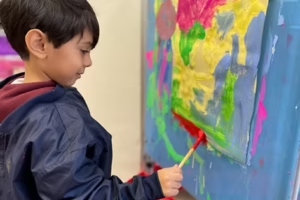
Art
Children are given opportunities to explore their ideas by experimenting, inventing and creating their own works of art using a range of materials. They learn a variety of skills, including how to draw, paint and sculpt.

Design Technology
Our Design and Technology curriculum develops children’s skills and knowledge in design, structures, mechanisms, electrical control and a range of materials, including food.
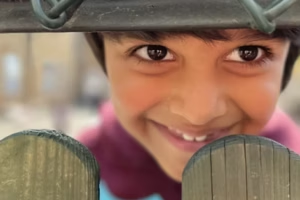
Early Years Foundation Stage
Our Early Years Curriculum has numeracy and literacy as its heart. It is led by creative staff who help the children grow both cognitively and socially.

English Reading
Reading is one of the most important skills we teach our children. It is a life-skill that enables them to explore ideas and gain information as the basis for other learning, and to gain access to a myriad of worlds through stories and poems.

English Speaking & Listening
Speaking and listening skills are prioritised throughout the school, not only in literacy lessons but throughout the curriculum as children learn to listen and talk in many ways including discussions, presentations and role play.
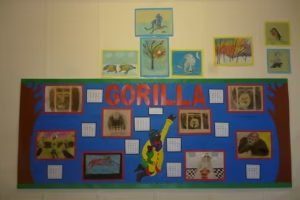
English Writing
The power of effective writing is immense in that it allows us to properly communicate – to inform, persuade, convince, entertain and evoke emotions.
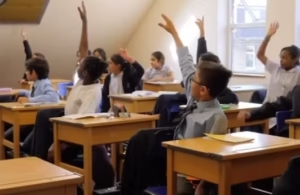
French
French is taught at Eastcourt from Year 1, by a specialist teacher. Lessons are active, with a large proportion of orally-based activities which relate to children’s lives. There is also a Spanish Club for younger children who want an earlier introduction to the subject.
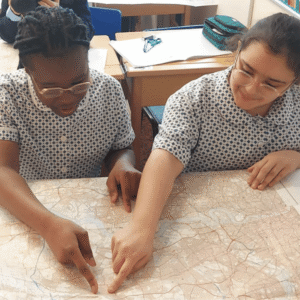
Geography
The aim of Geography is to instill in children a curiosity and fascination about the world, its places and people. They are introduced to geographical information and vocabulary as part of a planned sequence of learning relating facts to each other to build a web of knowledge.
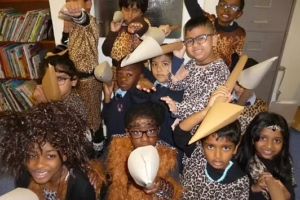
History
Our main aim is to create an interesting scheme of work, helping children to learn the importance of skills as well as knowledge. We introduce children to the fact that a world existed before they, and those around them, were born. We know what it was like from the evidence left behind, but often there are not enough clues to tell us the full story, so we have to do our best to complete the picture.
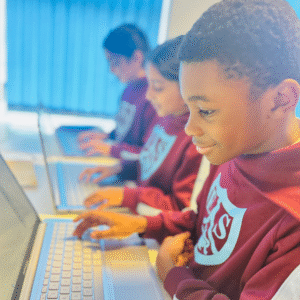
Computing
This subject is taught by an ICT specialist teacher. We aim to prepare children for life in a digital world where computers and technology have an ever-changing role to play. As the children develop, we hope that they will become more independent in their use of technology.
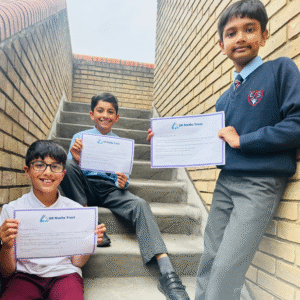
Maths
We believe Mathematics is a fascinating subject which has something to appeal to everyone. The aim of our daily lessons is to promote curiosity and encourage our children to grow into confident learners.
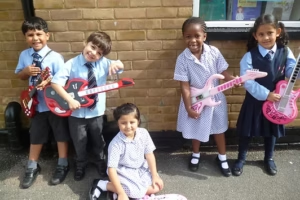
Music
Music lessons are led by a specialist teacher. The curriculum provides opportunities for children to participate in music-making activities as they listen to, perform and compose real music from a range of genres, cultures and styles.
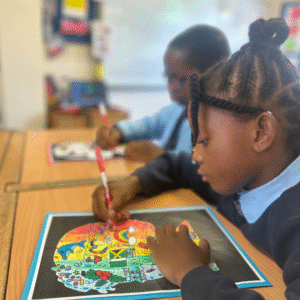
PSHE
The curriculum is built on the fact children need to be aware of themselves and the world around them, open to learning and questioning values and beliefs in an open-ended way. Their social development is helped by building a sense of identity in a multi-cultural society.
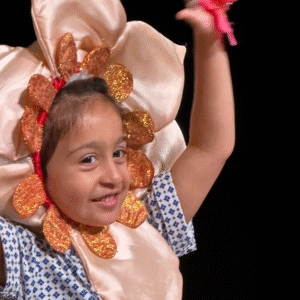
Performing Arts
Our Performing Arts curriculum is designed to develop confidence and concentration – playing games and taking part in different forms of story telling. It comprises of interrelated activities which explore feelings, knowledge and ideas, leading to understanding. It explores themes and issues, creates a safe context in which to do so, and provides opportunities to reflect on the insights gained in the process. It draws on the knowledge, interests and enthusiasm of the child.
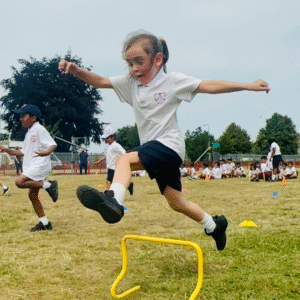
Physical Education
Our PE curriculum is designed so children take part in different sports which provide them with a sequential programme of skills. They are also encouraged to value fair play and respect.
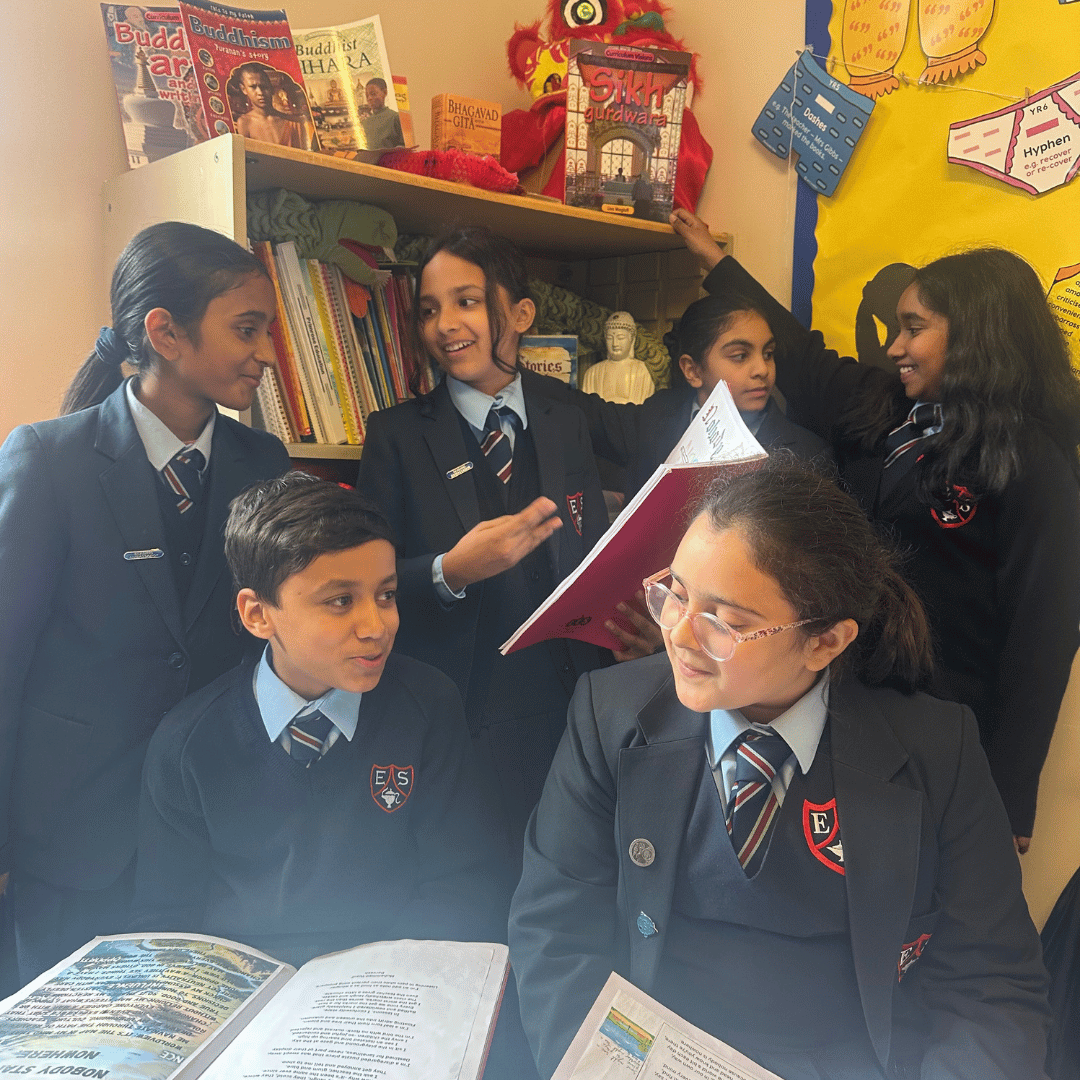
Religious Education
As a school we aim to use a variety of active approaches, linked in some cases to other subjects, to explore various religious and non-religious perspectives on issues relevant to our children; providing opportunities for reflection and spiritual development.
They learn to recognise the difference between right and wrong through the study of moral and ethical questions. Exploring issues of religious faith and value, they develop their knowledge and understanding of the cultural context of their own lives.
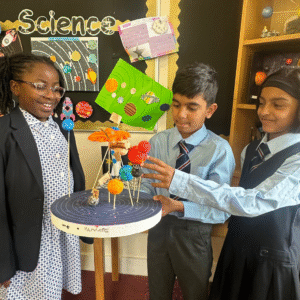
Science
In Science we focus on practical activities to explore, develop and consolidate scientific ideas, skills, knowledge and understanding.
As a result, by the time the children reach Year 5 they are ready to move from science topics into the 3 explicit areas of Biology, Chemistry and Physics.

Non Verbal Reasoning
Pattern recognition and codes which rely on logic and thinking out of the box provide a different sort of challenge from that presented in other subjects. The aim is to assess children’s visual acuity, speed of perception, and ability to recognise and manipulate objects.
Verbal Reasoning


